
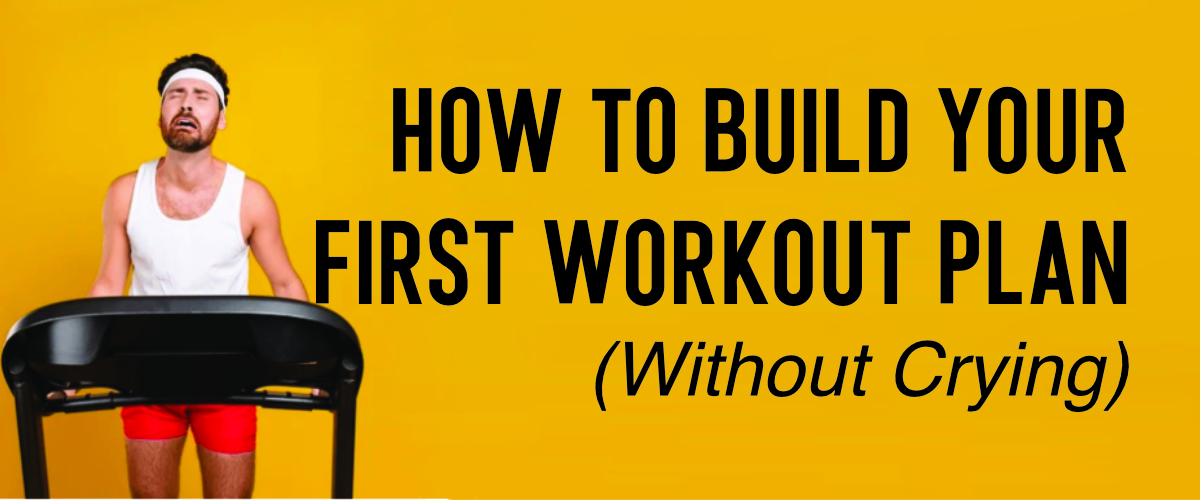
How to Build Your First Workout Plan (Without Crying)
So you finally decided to start working out, and now you’re drowning in TikTok tips, conflicting advice from Chad at the gas station, and YouTube thumbnails of shirtless dudes screaming about reps.
Let’s make this easy.
At Regina Beach Gym, we’re all about keeping things simple, effective, and free from grindset nonsense. Here’s how to build your first strength training plan using something called Push/Pull/Legs, or “PPL” if you’re in a hurry.
Step 1: What’s a Push/Pull/Legs Split?
Think of it like organizing your workouts by the type of movement:
- Push Day = Anything where you’re pushing something away from you (chest, shoulders, triceps)
- Pull Day = Anything where you’re pulling weight toward you (back, biceps)
- Leg Day = You get it. Legs.
It’s easy to understand, repeatable, and gives your muscles time to recover between sessions.
Step 2: The Basic Weekly Schedule
We recommend training 3x per week to start. Like this:
- Monday: Push
- Wednesday: Pull
- Friday: Legs
More ambitious? Do 6 days and cycle through PPL twice. Less ambitious? That’s cool too—2 days a week will still get you stronger than zero days a week.
Step 3: Movement Types and What to Use at RBG
PUSH DAY
Main Lift:
- Dumbbell Bench Press (horizontal push)
- Landmine Press OR Dumbbell Overhead Press (vertical push)
Accessories:
- Cable Tricep Pushdowns
- Dumbbell Lateral Raises
PULL DAY
Main Lift:
- Cable Row (horizontal pull)
- OR Lat Pulldown (vertical pull)
Accessories:
- Dumbbell Curls
- Face Pulls
- Back Extensions (Roman Chair)
LEG DAY
Main Lift:
- Belt Squat
- OR Trap Bar Deadlift
Accessories:
- Leg Curl / Leg Extension Machine
- Split Squats (start with bodyweight, cry quietly after)
*CORE (Add to any day OR to EVERY day!):
- Sit Ups
- Planks
- Cable Crunches
- Deadbugs
- Pallof Press (Choose one, do 2–3 sets of 10–15 reps)
Step 4: How Many Reps Should I Do?
Start with 3 sets of 8–12 reps for most exercises.
That’s the sweet spot for building muscle (aka hypertrophy, if you wanna sound fancy). For your main lifts you can always go a bit heavier and lower the reps if you want to focus a bit more on strength; but still try to keep it at least 5 reps.
Too easy? If you’re able to do more than 10 or 12 reps of an exercise, consider adding weight next week. Add just enough that you get into the proper rep range. If it’s not actually heavy enough to challenge the muscle, then there’s no reason for the muscle to grow (bigger or stronger).
Too hard? Drop the weight or reduce the reps— just don’t drop the dumbbell on your toe. Once things get TOO heavy for us to properly do the exercise, we’re not really getting the benefits we’re after as other muscle groups start to assist in the lift.
Step 5: Progressive Overload (a.k.a. Slowly Doing More Stuff)
Each week, try to:
- Add a little weight (2.5–5 lbs)
- OR do an extra couple reps or even another set
- OR improve your form, focus on really squeezing the muscle, lowering the weight slower, etc.
Progress isn’t always linear—but it should trend generally upward over time. Think gentle climb, not rocket ship.
Step 6: What’s a Deload and Why Do I Need It?
After 4–6 weeks, take a deload week:
- Do fewer sets
- Use lighter weights
- Rest and reset
You’re not being lazy—you’re being smart. This helps you avoid burnout, injuries, and gym-induced emotional meltdowns.
Final Thoughts
Your first program doesn’t have to be perfect—it just has to be done. You can (and will) tweak it later.
Need help? We’ve got personal training and orientation sessions!
We’ll help you build a program that works for you—even if you still call the cable row “that sit-down pull thingy.”